
VERSION INSTEAD OF SUSHI!
MAGAZINE PRESENTATION, June 13, 2026 at Karmelitermarkt, 1020 Vienna, 9.00 am - 4.00 pm
The cultural, social, or political context plays a crucial role in understanding art and culture. Art is always interpreted against the backdrop of its specific context, especially when culture-specific information necessary for understanding is missing or misunderstood. In VERSION 07, we speak with artists and cultural practitioners from Japan and discuss this particular cultural frame of reference with them. We were especially interested in re-evaluating current geopolitical challenges, the influence of social codes on topics such as globalization and multiculturalism, feminism and queerness, the specific approach to architecture and urban planning, and the background behind the significance of manga culture.
WITH CONTRIBUTIONS FROM: Aki Sasamoto, Kota Takeuchi,Yoshiko Shimada, Konrad Winter, Sou Fujimoto, Kazumi W. Minoguchi, Michael Schneider, Christiana Perschon, Jojo Gronostay, Moene Kamiya, Pilhwan Jeong, Miyu Kanai, Tomohiro Kubotaoguiss , Momoka Araki, Ursula Maria Probst, Raashish India, Kai Lam
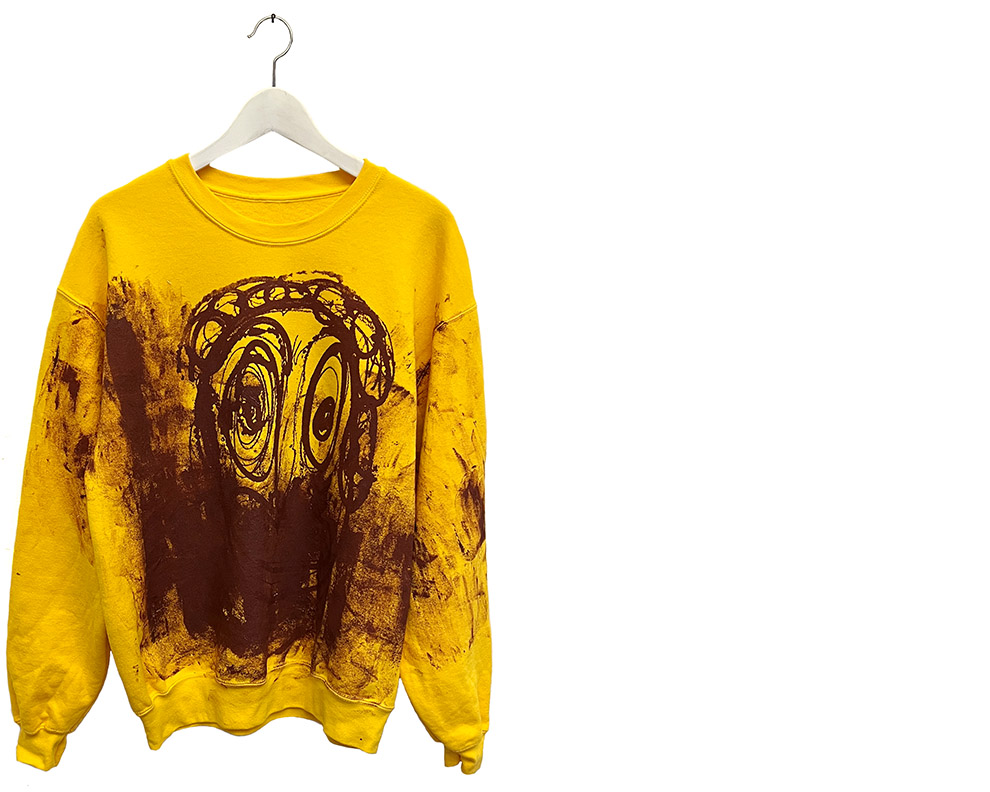
"Dressed like VERSION" / Produced for VERSION magazine / 2025
The idea is that it also works as a work of art on the wall.
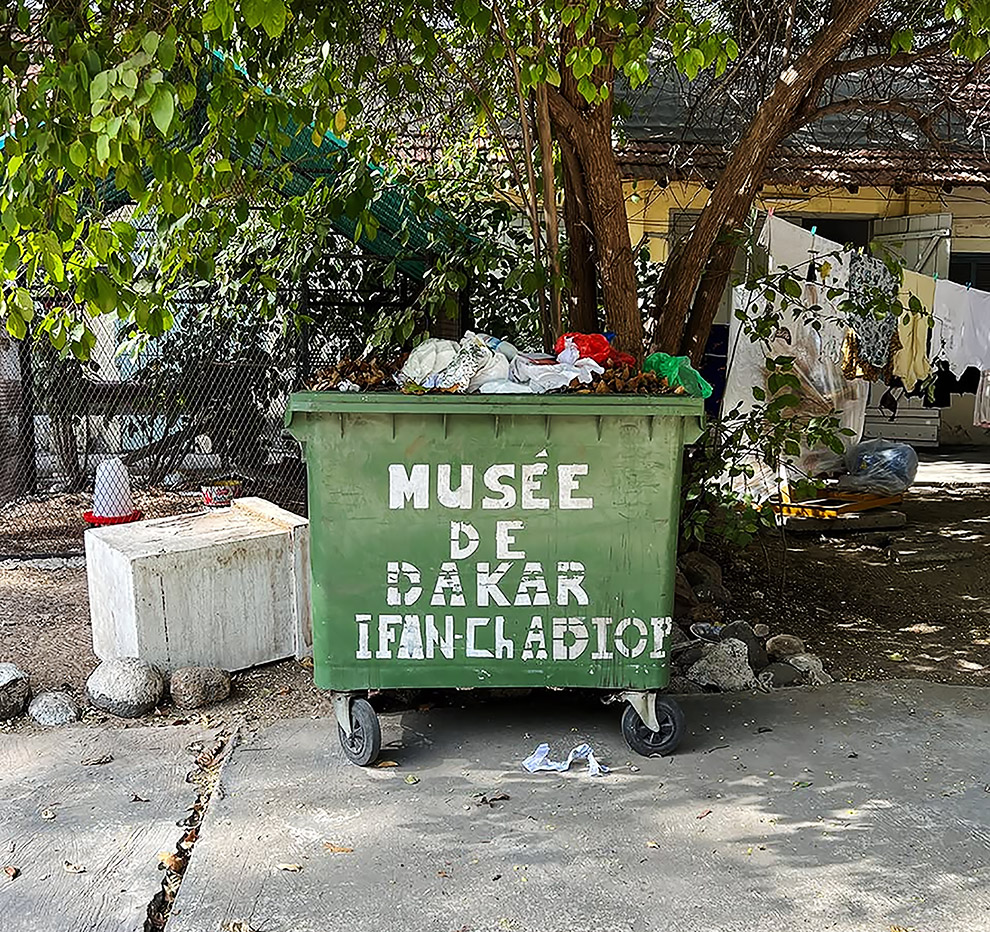
IFAN Musée de I'Institut Fondamental d'Afrique Noire
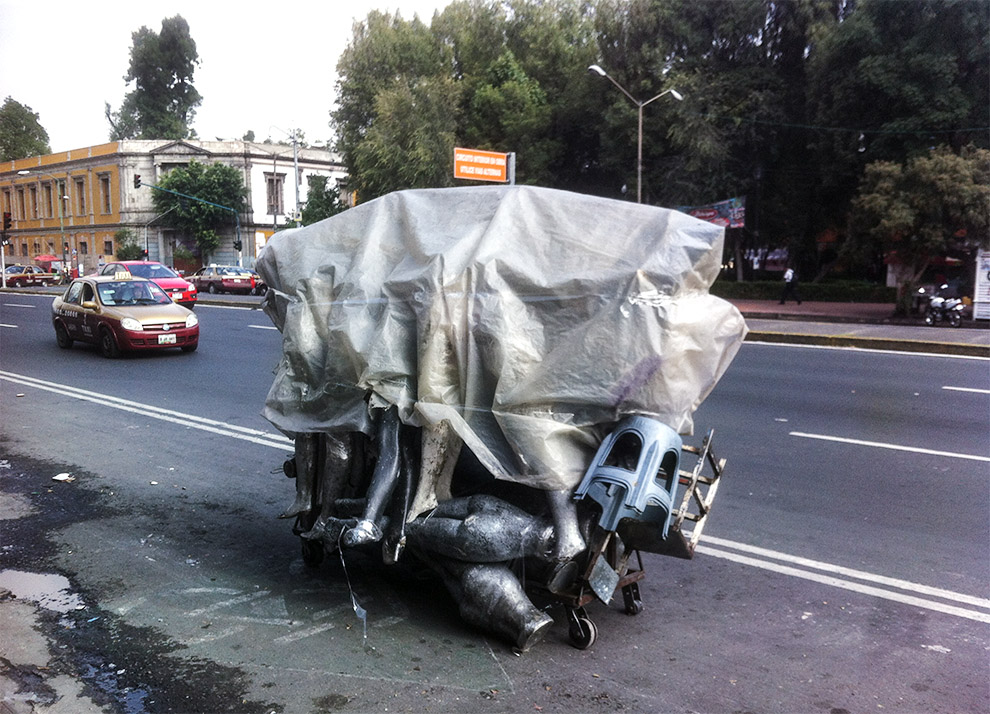
"How can that be?", Mexico City / 2012
Dolls, trolley, plastic wrap
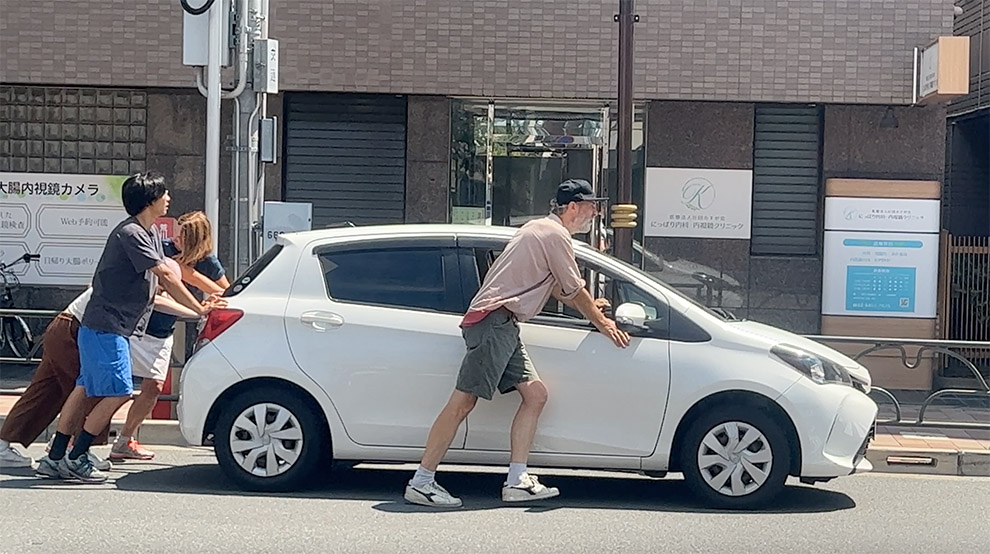
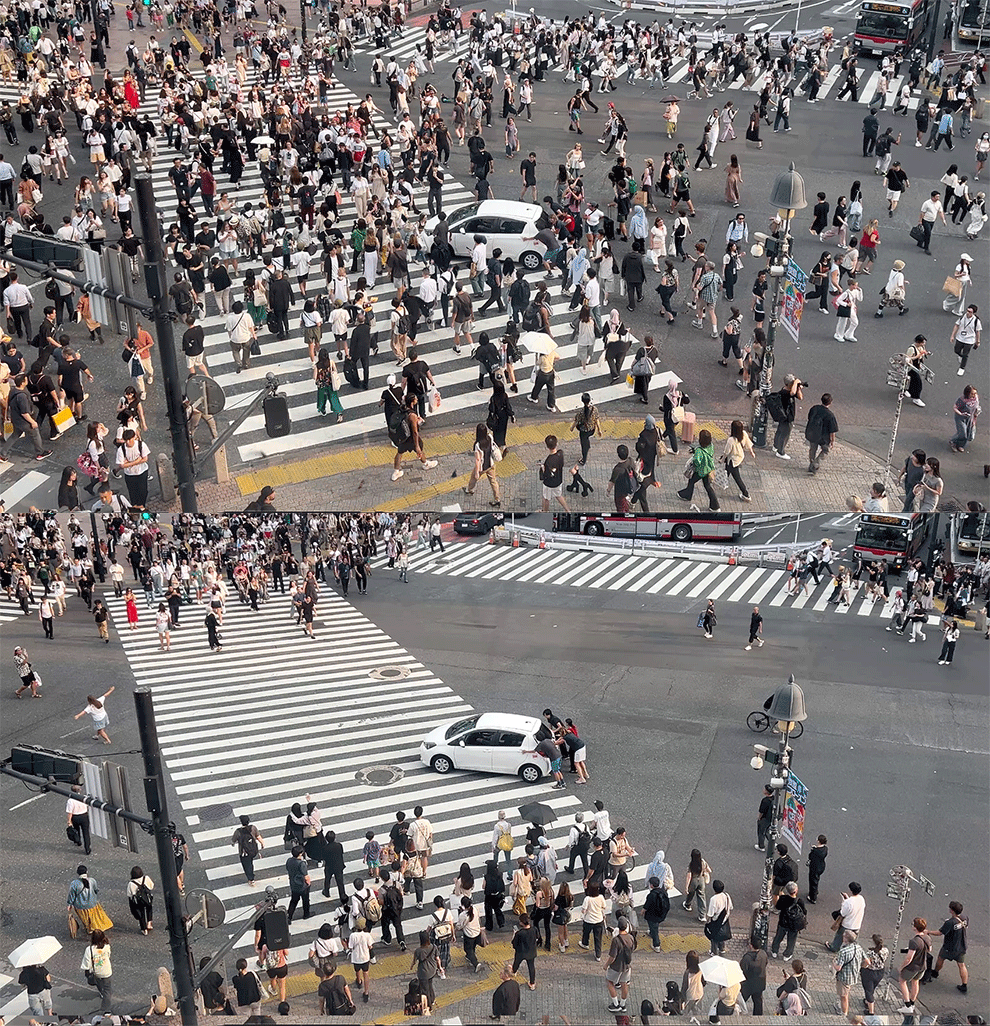
"AUTOINKOGNITO", Tokyo / 2025
AUTOKONGNITO is a film by Manfred Grübl about the relationship between people and cars and a city
For my work in Tokyo, I want to push a car through the city. I will push the car myself, and the intention is that I will receive assistance from passers-by. The intervention/film leads through different urban structures. From a rural single-family house structure with small alleys where houses are lined up next to each other, to larger housing complexes, to a high-rise structure with neon signs, where the car then comes to a standstill at the Shibuya intersection. Movement, structure and the people who move within such systems are very often an essential part of my work. Part of the artistic work is the intervention in Tokyo and a film that is intended to function as a stand-alone work.
Für meine Arbeit in Tokio möchte ich ein Auto durch die Stadt schieben. Das Auto wird von mir geschoben und die Absicht ist, dass ich von Passant*innen Unterstützung bekomme. Die Intervention/der Film führt durch unterschiedliche Stadtstrukturen. Von einer ländlichen Einfamilienhaus Struktur mit kleinen Gassen wo Haus an Haus aneinander gereiht sind über größere Hausverbände bis hin zu einer Hochhausstruktur mit Leuchtreklame wo dann das Auto an der Shibuya Kreuzung zum erliegen kommt. Bewegung, Struktur und die Menschen die sich in solchen Systemen bewegen sind in meiner Arbeit sehr oft ein wesentlicher Bestandteil. Teil der künstlerischen Arbeit ist die Intervention in Tokio und ein Film, der als eigenständige Arbeit funktionieren soll.
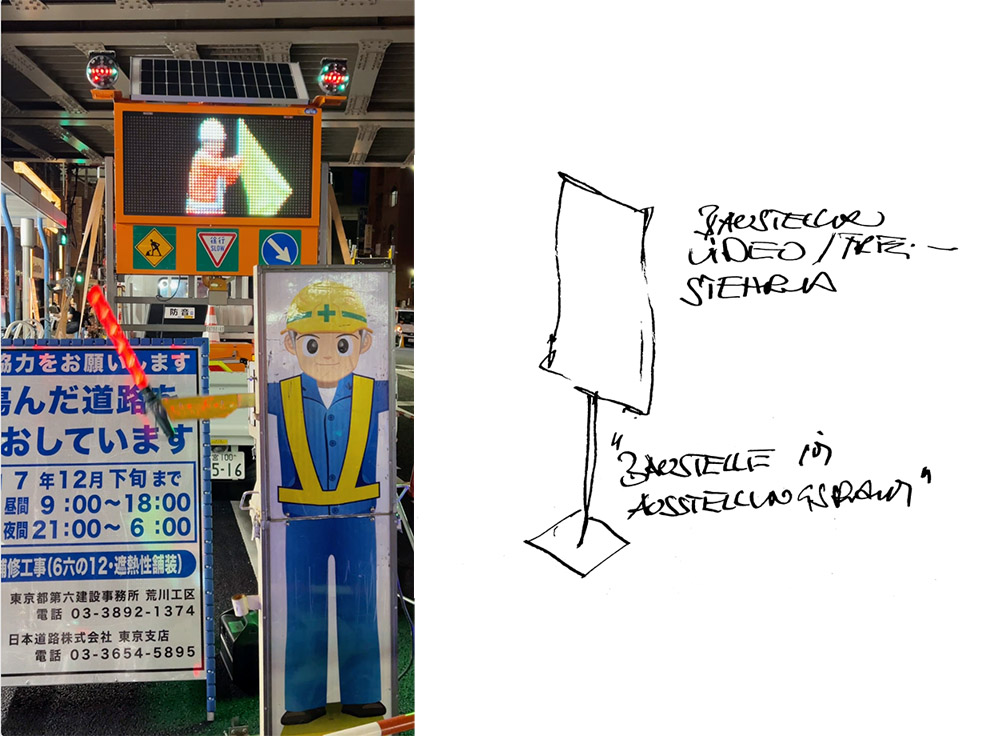
"BAUSTELLE IM AUSSTELLUNGSRAUM", Tokyo / 2025
Video / Installation
The video shows the barriers and warning signs at a construction site in Tokyo Nishinippori. In Japan, marshals are used to keep everything flowing smoothly. There is hardly a place that is not regulated, either by floor markings, LED signs, loudspeakers or marshals.
Das Video zeigt die Absperrung und Warnzeichen einer Baustelle in Tokio Nishinippori. In Japan versucht man durch Ordnungspersonen alles im Fluss zu halten. Es gibt kaum einen Orte der nicht geregelt ist. Entweder durch Bodenmarkierung, LED Zeichen, Lautsprecher oder Ordnungspersonen.
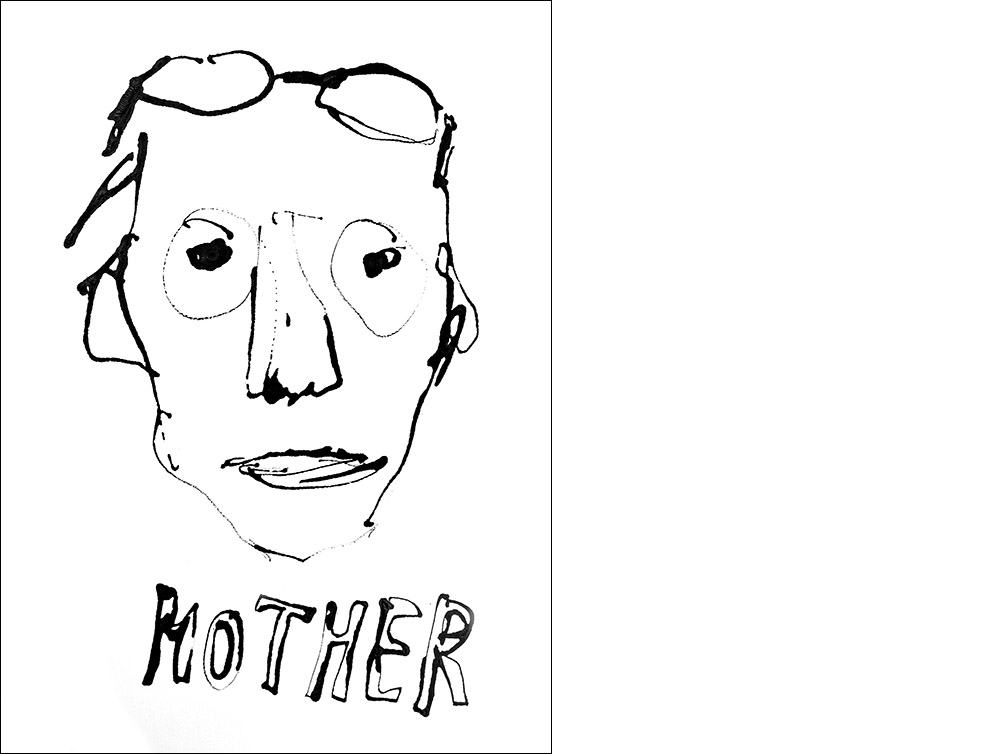
"Mother", Tokyo / 2025
Drawing on pape
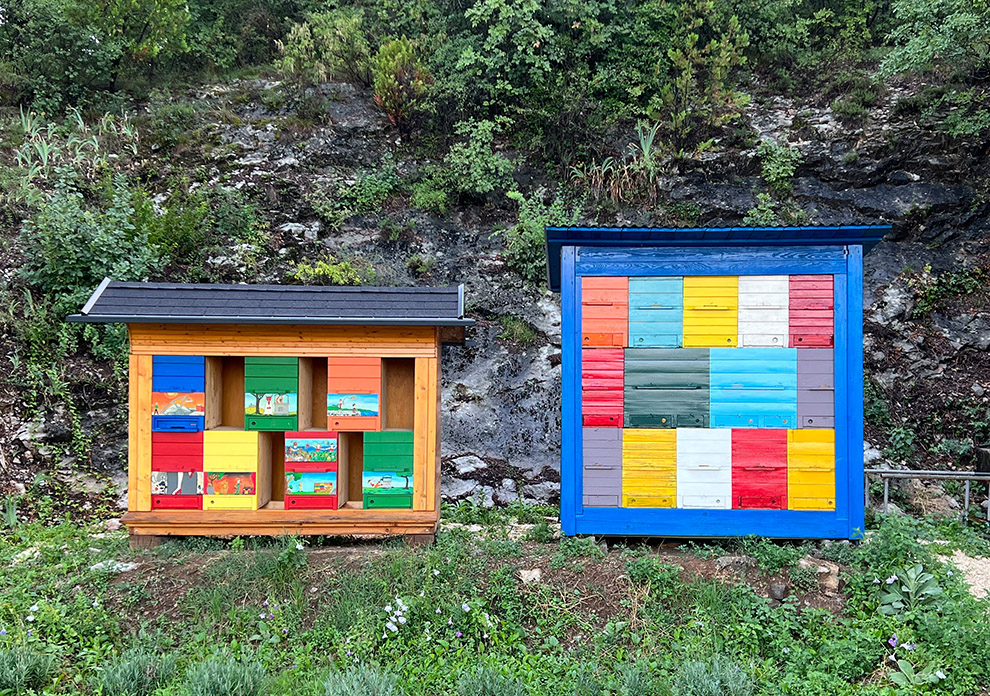
"WHAT COLOR IS IT TODAY", Triest / 2022
Lambda Print / gerahmt Format 70x100 cm

Public Matters / Contemporary Art in the Belvedere Garden / 13 May 2023 - 1 October 2023 / Manfred Grübl, Anna Jermolaewa
"HALBMAST" / "Jede*r hat das Recht auf Leben, Freiheit und Sicherheit der Person" ist der Allgemeinen Erklärung der Menschenrechte von 1948 entnommen und dieser Satz umfaßt die Weltkugel auf der Flagge. Grundrechte sind ein verfassungsgesetzlich gewährleistetes Recht. Die Menschenrechtskonvention ist in der Regel auch in die Verfassung mit eingeschrieben. Für die Fahne und unser Projekt haben wir bewusst dieses fundamentale Grundrecht gewählt, weil es jedem Menschen zusteht. Das Recht auf Leben ist die Vorbedingung für die Ausübung aller anderen Menschenrechte und daher eine zentrale Garantie, unabhängig von der Herkunft. Die Flagge im Belvedere 21 ist ein weitreichendes Signal und fordert die Wahrung der Grundrechte, ohne die unsere demokratischen Werte ohne Fundament sind.
Art – a public matter? Ever since their opening to the general public in the 1780s, the Belvedere Gardens have been used extensively as places for recreation and communality. The occasion of the 300th anniversary of the completion of the Upper Belvedere is a good opportunity to emphasize that they are clearly also places of art. From May through September, an extensive contemporary sculpture project complements the Baroque sculpture program at the Belvedere’s three locations. Site-specific as well as existing works by international and local artists will connect all of the museum’s gardens along a path – from the main courtyard of the Lower Belvedere and its Privy Garden to the grand Baroque gardens of the Upper Belvedere and the modernist sculpture garden of the Belvedere 21 – highlighting how the gardens organically grew into an ensemble. Public Matters follows an expanded concept of sculpture that includes time- and process-oriented approaches. As a critical homage, the show addresses the representation of power in the past and present as well as its transformation over time. In particular, the focus is on aspects of the public and the public sphere that emerge with and through art. The project is accompanied by a comprehensive publication featuring essays and texts on the works on display. With works by Thomas Baumann, Renate Bertlmann, Louise Bourgeois, Verena Dengler, Carola Dertnig, VALIE EXPORT, Wil Frenken und Fria Elfen, Thomas Geiger, Roland Goeschl, Dan Graham, Thomas Houseago, Alfred Hrdlicka, Iman Issa, Anna Jermolaewa und Manfred Grübl, Kapwani Kiwanga, Brigitte Kowanz, Hans Kupelwieser, Marko Lulić, Goshka Macuga, Hans Op de Beeck, Ingeborg G. Pluhar, Maruša Sagadin, Toni Schmale, Kateřina Šedá, Socratis Socratous, Kara Walker, Lawrence Weiner, Lois Weinberger, Franz West, Fritz Wotruba, Heimo Zobernig Curators: Christiane Erharter, Georg Lechner, Sergey Harutoonian, Axel Köhne, Claudia Slanar, Luisa Ziaja Assistant curators: Miroslav Halak, Andrea Kopranovic